Reuse of Industrial Buildings: The Rise of Sustainable Transformation
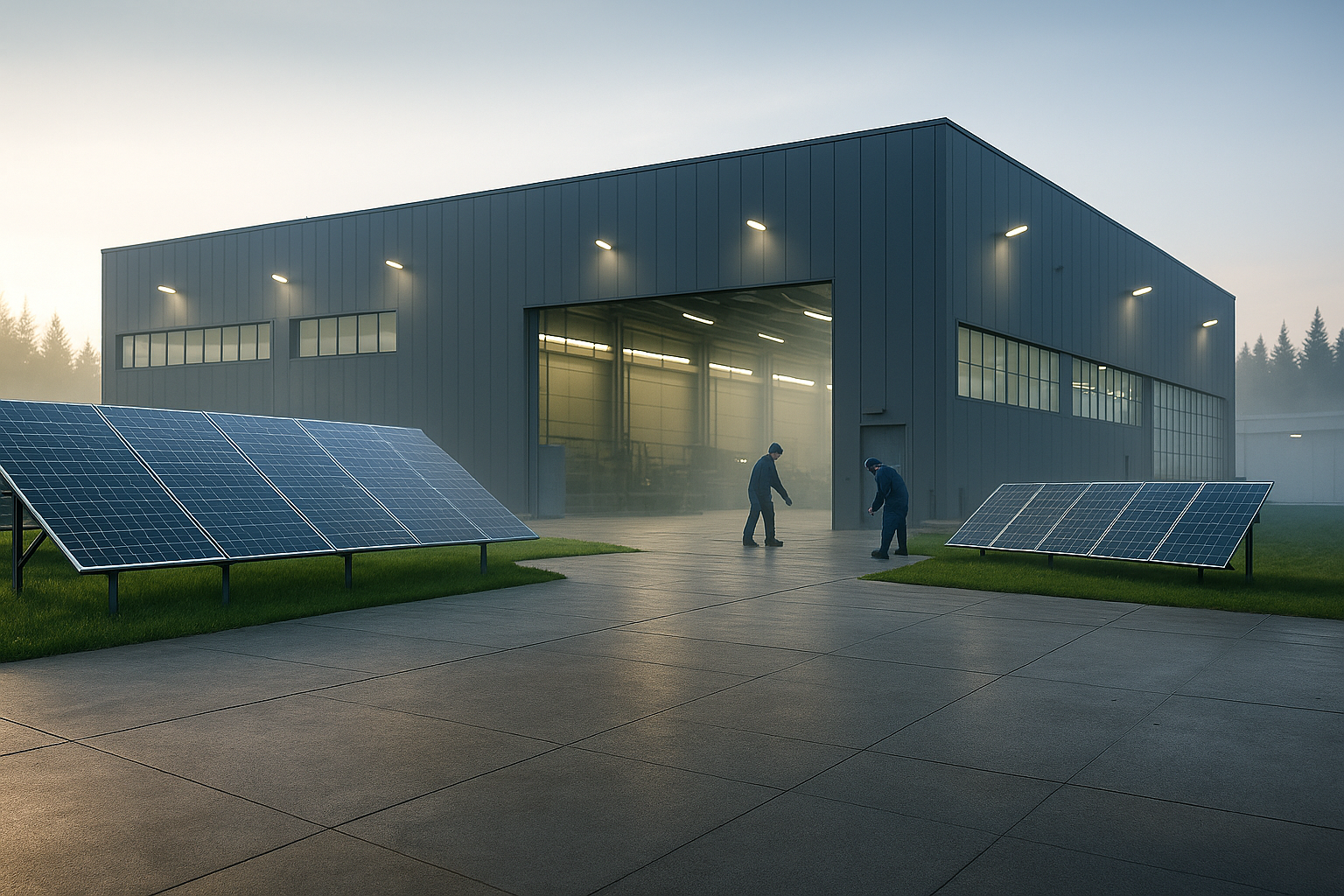
Today, many international companies operating in heavy industry sectors such as infrastructure, construction and defense are focusing not only on economic success but also on environmental sustainability. Large-scale engineering firms in countries such as Australia, Germany and South Korea are rapidly adopting environmentally friendly practices such as reducing carbon emissions, using recyclable materials and energy efficiency in their production processes. This transformation shows that the defense industry is also being reshaped on the axis of sustainability.
- After 2020, acceleration of environmentally friendly production investments in the defense industry
- Transition to logistics and transportation systems that reduce carbon footprint
- Strategic investments in sustainable defense technologies in Europe and Asia
In the 2020s, many countries started to take comprehensive strategic steps to increase sustainability in the defense industry. In particular, European Union countries and South Korea have adopted new production models and technology investments that will reduce environmental impact as official policies. These approaches directly affect not only the environment, but also production efficiency and cost balance.
Companies operating in heavy industries such as infrastructure, construction and defense are increasingly adopting practices to reduce environmental impact. Materials and production methods used in road, bridge, energy and military transportation infrastructures are now evaluated not only according to durability but also sustainability criteria. This transformation enables the defense industry to evolve into a structure that is not only strategic but also environmentally responsible.
"Sustainability is no longer only an environmental responsibility, but also a strategic competitive advantage. We have to develop environmentally compatible, long-lasting and efficient solutions in all production processes, including the defense industry."- International Defense and Technology Experts Report, 2023
 The vision of sustainability is not limited to a few countries, but continues to spread on a global scale. Today, defense industry companies around the world are investing in systems that reduce environmental impact, from production processes to logistics operations. This transformation is leading to the reshaping of many critical infrastructures, including land, air and maritime transportation.
In the last decade, sustainability principles have been increasingly prioritized in defense industry and critical infrastructure projects around the world. From military base modernizations to airport environmental projects, the use of materials that reduce environmental impact, energy efficiency and recyclable systems are preferred in many applications. This approach both increases environmental awareness and supports operational efficiency.
Energy and defense infrastructures are among the sectors that bear great responsibility for environmental sustainability. Solutions used in land, sea and underground transportation systems are now evaluated not only on durability, but also on their environmental compatibility. In major infrastructure projects in Europe, South America and Asia, environmentally friendly materials and energy-efficient systems are preferred, and the sustainable production approach is being promoted across the sector. This transformation also provides strategic gains such as long-term cost advantages and reduced environmental risks in defense and energy infrastructures. Environmentally responsible engineering practices are no longer just a preference, they have become a global standard.