Radio Frequency Stealth in Composite Cases: The Advantage of Confidentiality in Defense
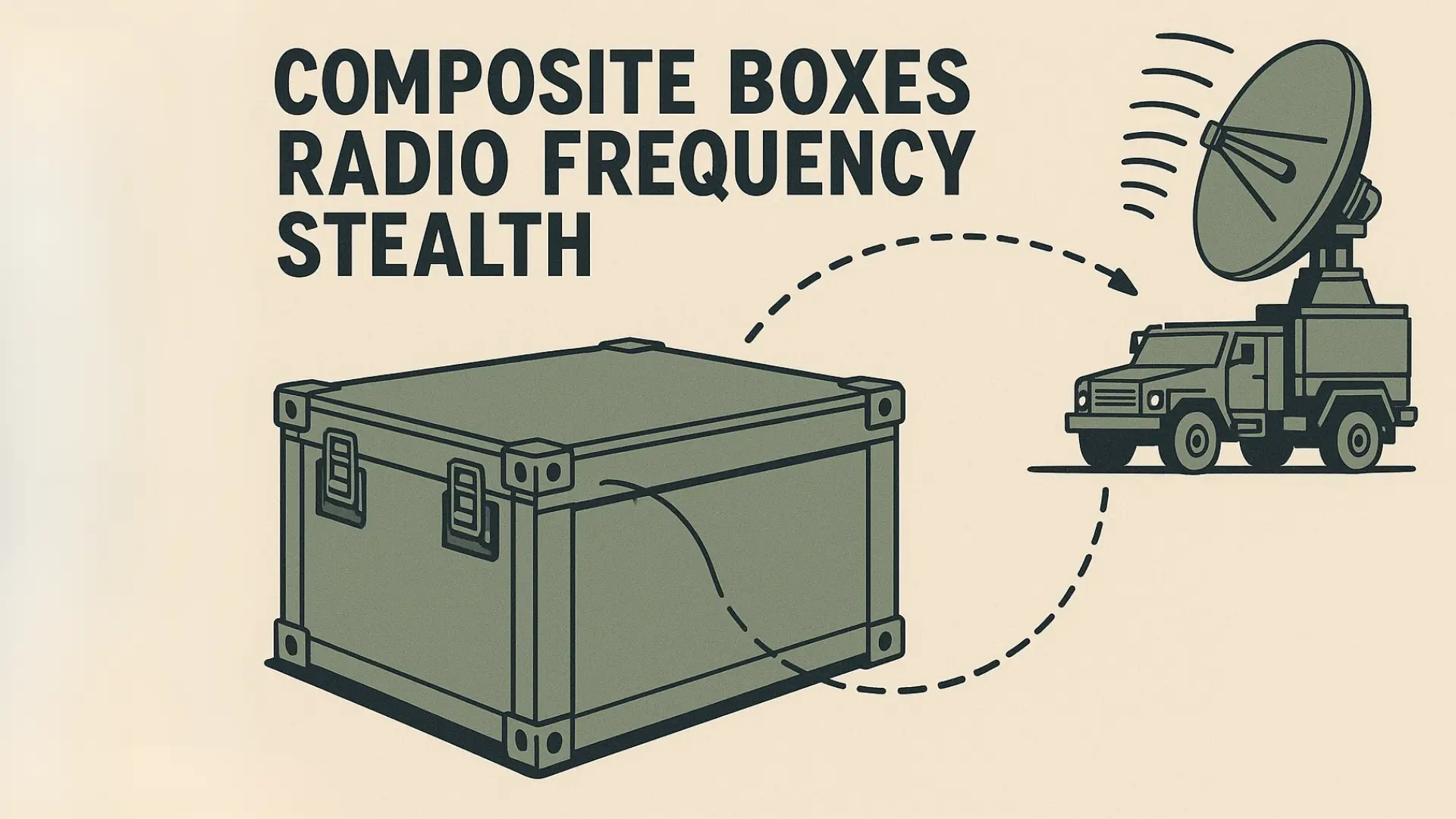
Today, many international companies operating in heavy industry sectors such as infrastructure, construction and defense are focusing not only on economic success but also on environmental sustainability. Large-scale engineering firms in countries such as Australia, Germany and South Korea are rapidly adopting environmentally friendly practices such as reducing carbon emissions, using recyclable materials and energy efficiency in their production processes. This transformation shows that the defense industry is also being reshaped on the axis of sustainability.
- Minimizes radar cross-section (RCS), providing low visibility against radar and sensor systems.
- Protects sensitive devices from electromagnetic waves and prevents communication interruptions.
- Offers significant cost and speed advantages in logistics processes thanks to a much lighter structure compared to metal cases.
- Provides high resistance against impact, humidity, and temperature changes in harsh climates and terrain conditions.
In recent years, investments in composite cases that provide RF stealth have increased, particularly in the defense industry. The main reason is not only transport safety but also the need for confidentiality and strategic superiority. While traditional metal cases reflect radar waves and are easily detectable, composite cases allow munitions, devices, or critical equipment to be transported without detection during operations.
In countries such as the United States, Germany, and South Korea, composite cases that have passed RF stealth tests are no longer optional but mandatory in defense logistics operations. Accepted under international standards, these solutions guarantee both operational security and continuity in global logistics chains.
RF stealth technologies are no longer optional in modern warfare doctrines; they have become a mandatory criterion.”— NATO Defense Technologies Panel, 2024
Composite cases with RF stealth provide secure transportation for a wide range of items—from sensitive electronic devices to strategic munitions, from unmanned aerial vehicle components to radar systems. This minimizes operational risks while offering both environmental and economic benefits. Their lighter structure enables fuel savings, and long service life supports sustainable logistics.
Today, many defense industry companies, logistics partners, and government institutions accept only composite solutions that have passed RF invisibility tests in their transport processes. This approach has become one of the most important factors enhancing competitiveness in the international market and setting the new standard of confidentiality in defense technologies.